Advertising ChromosPrevious | Advertising Chromos Index | NextHome |
Liebig The Liebig's Extract of Meat Company (Lemco) sold Liebig and Oxo meat products and later Oxo beef stock cubes, which one can still buy today. It was named after Baron Justus von Liebig, a German 19th-century organic chemist who invented the Liebig product in 1840 as a cheap substitute for beef. It was a black paste of concentrated beef extract and salt packaged in a glass bottle and was originally sold as a health tonic in pharmacies. The effort went global in 1865 when Lemco was established in London with Liebig's partner, engineer George Christian Giebert. The manufacturing plant was in Argentina and used cheap meat from cattle slaughtered only for their hides. Some later 20th century cookbooks use it as a gourmet ingredient. From 1870 to 1975 Liebig produced more than 11,000 trading card sets, normally in packs of 6. One pack was given away with each product. Often they were printed in more than one language to suite various international markets. I've found two sets that illustrate lace themes. At the top is a single card showing Valenciennes lacemakers. I have not been able to find the remaining five from this set - they probably showed other crafts. This one is quite rare. Below I show two examples of the more common historical lace set, the first a near perfect set in French, the second with some defects in Italian. The lace set of six is dated 1912. All cards measure 4-3/8" x 2-3/4". first posted 3/23/2009 |
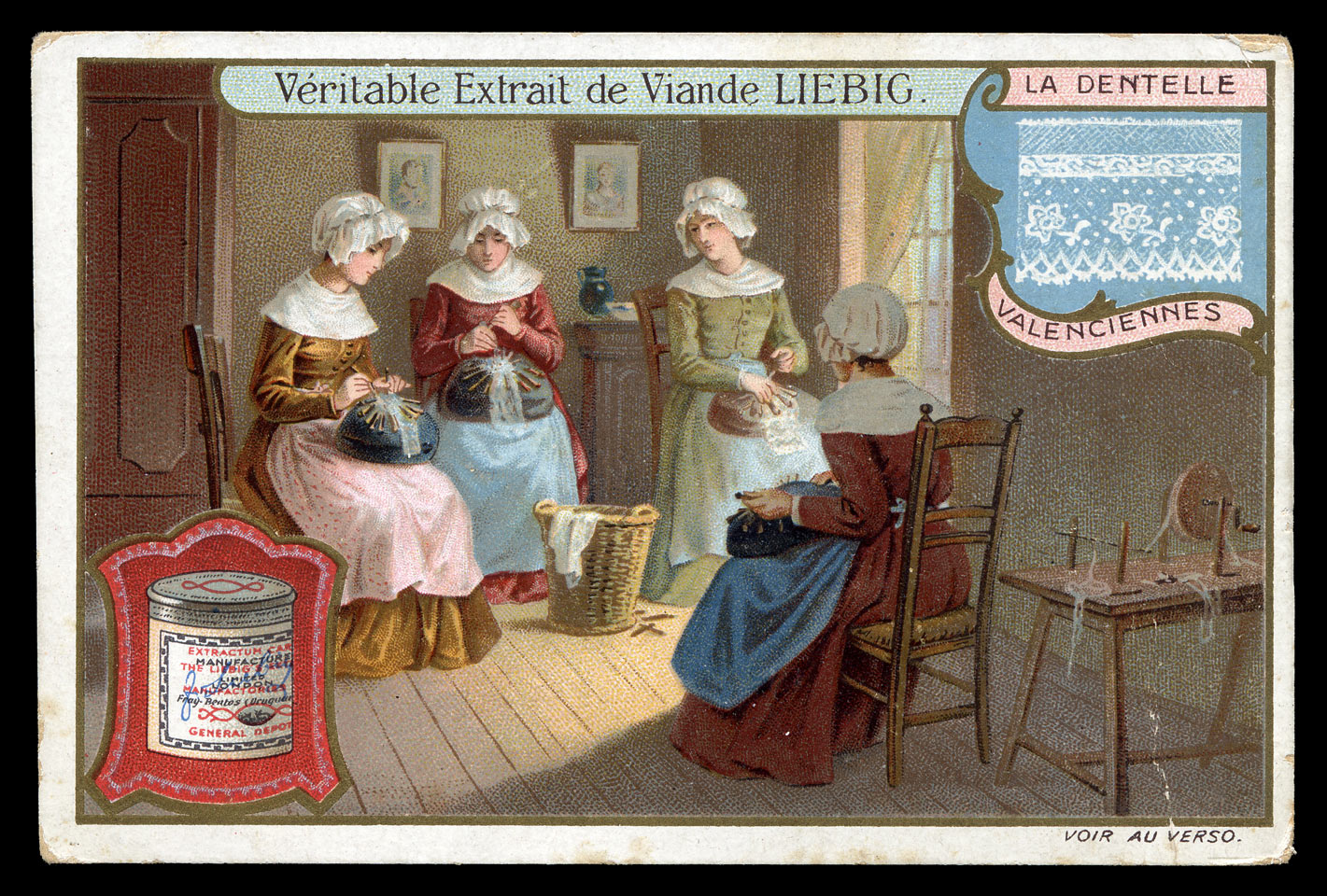 click here for reverse of Valenciennes 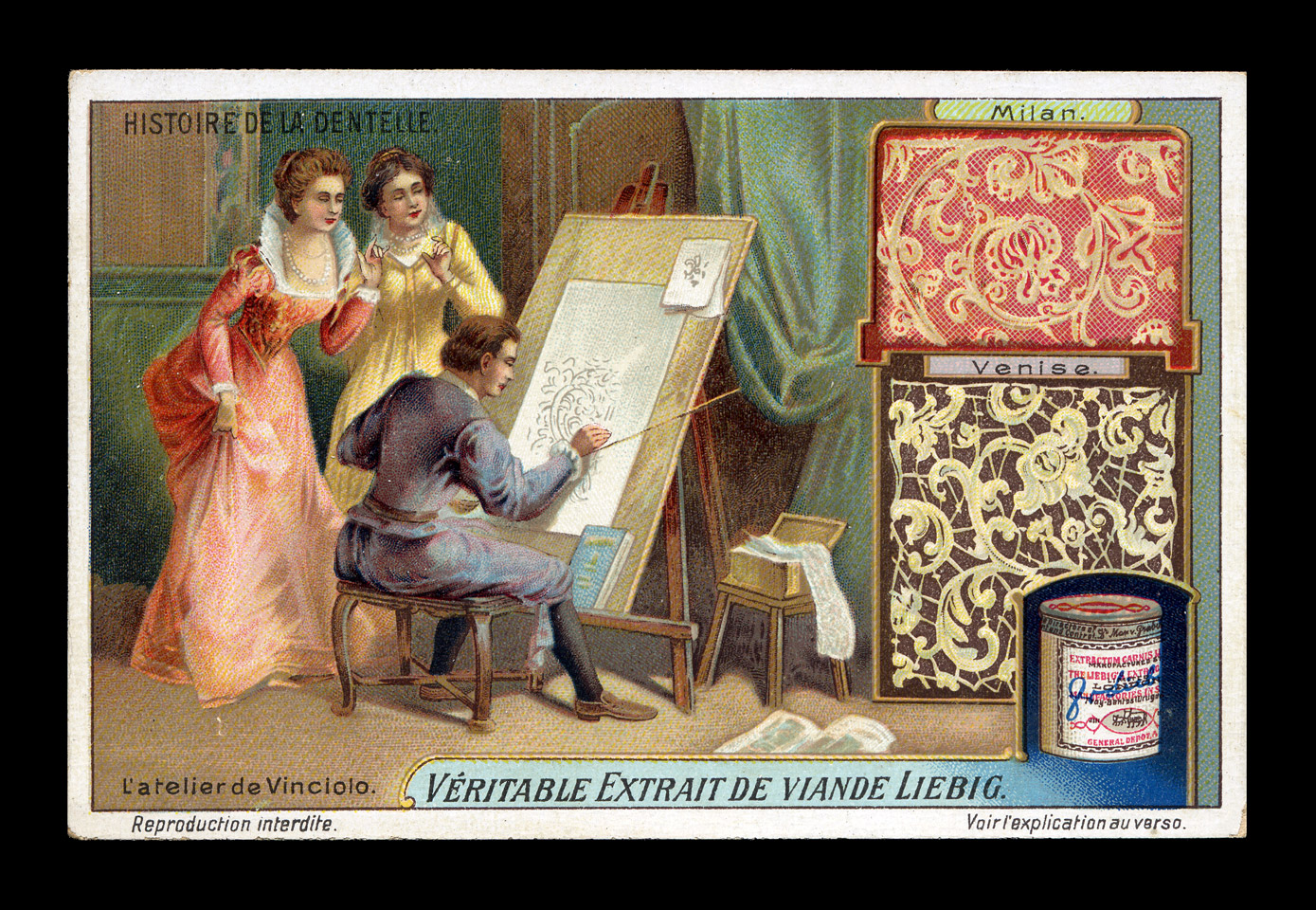
 click here for reverse of Milan click here for reverse of Alençon 
 click here for reverse of Le Puy click here for reverse of Espagne 
 click here for reverse of Bruxelles click here for reverse of XVIe siècle 
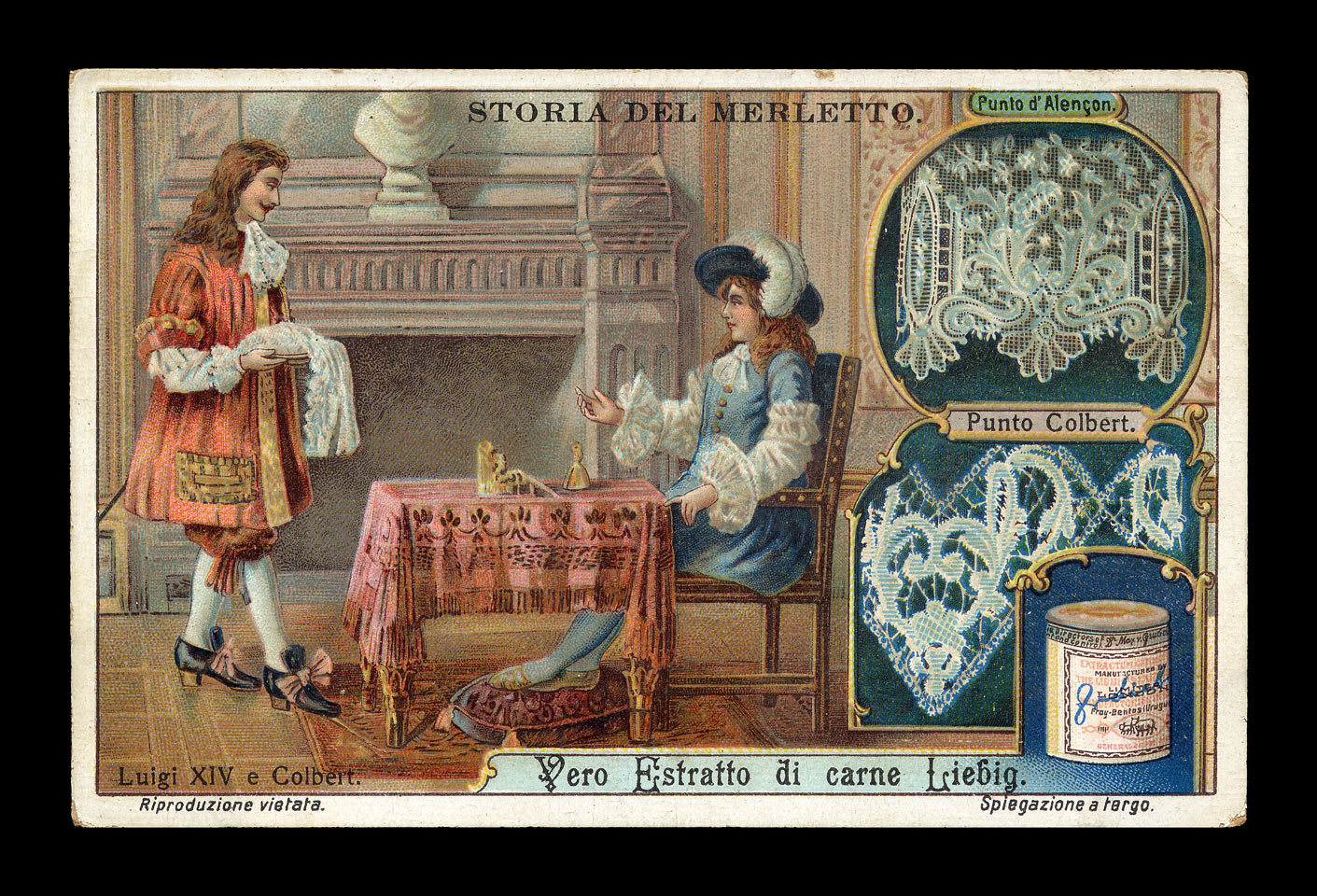 click here for reverse of Milan click here for reverse of Alençon 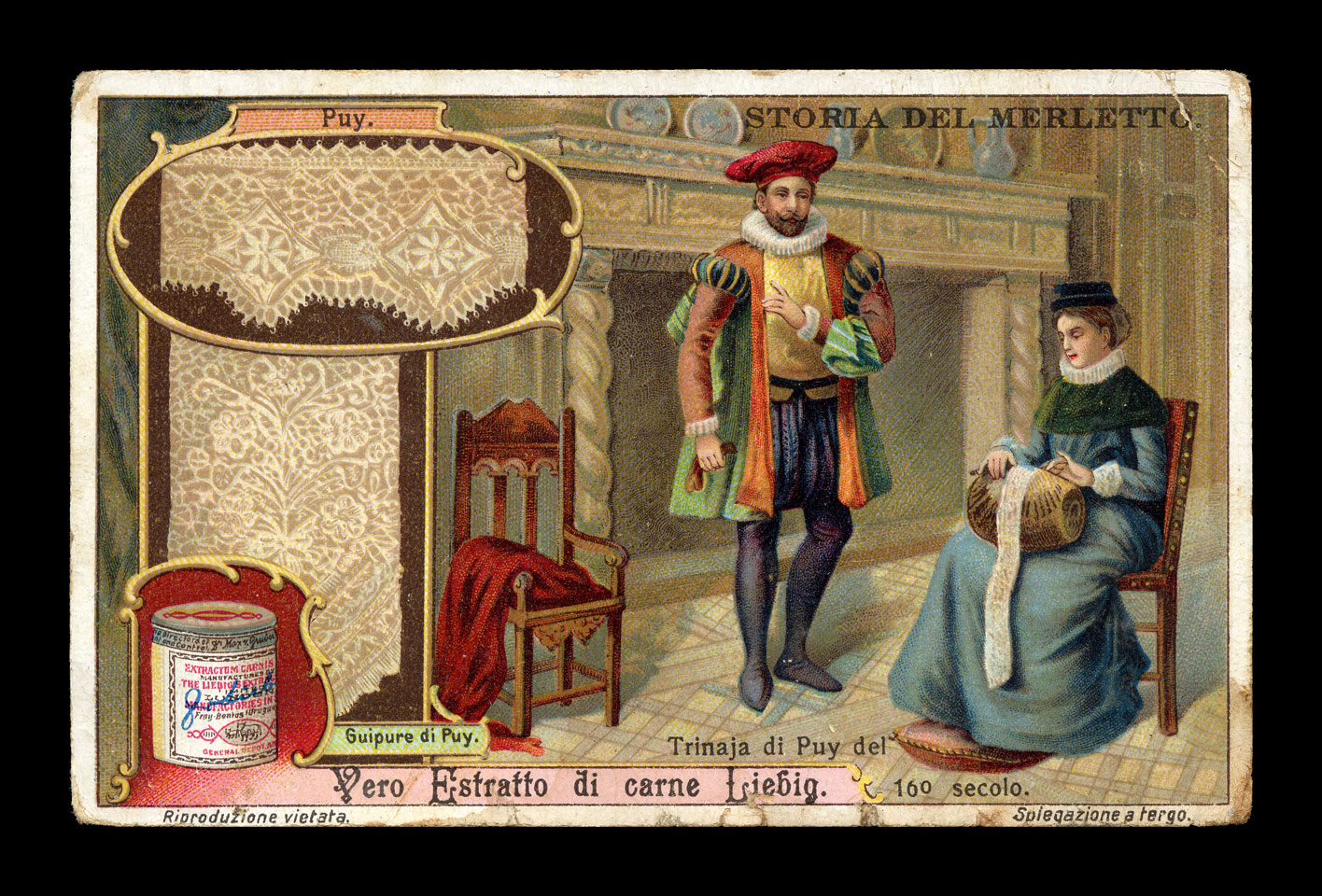
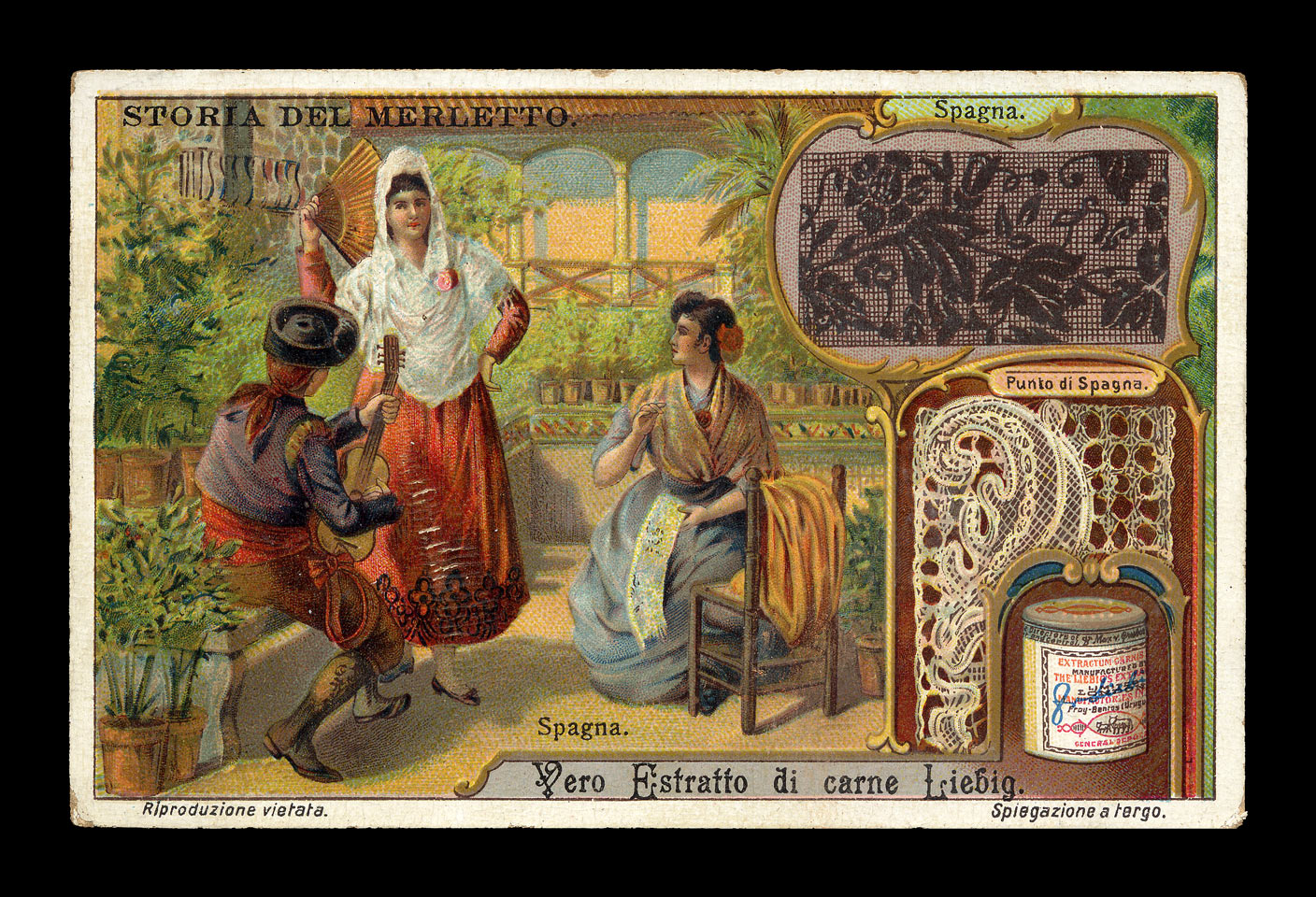 click here for reverse of Le Puy click here for reverse of Espagne 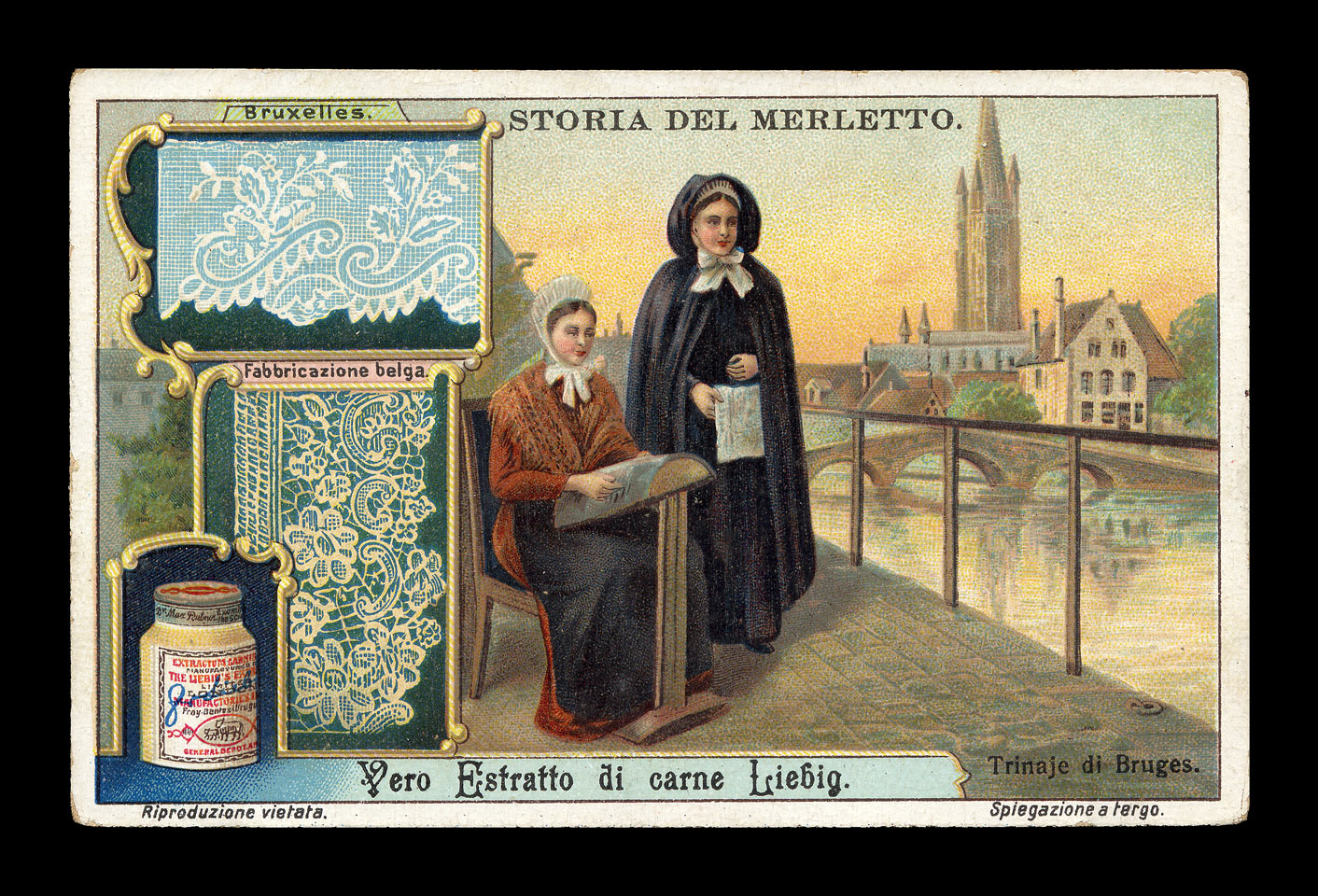
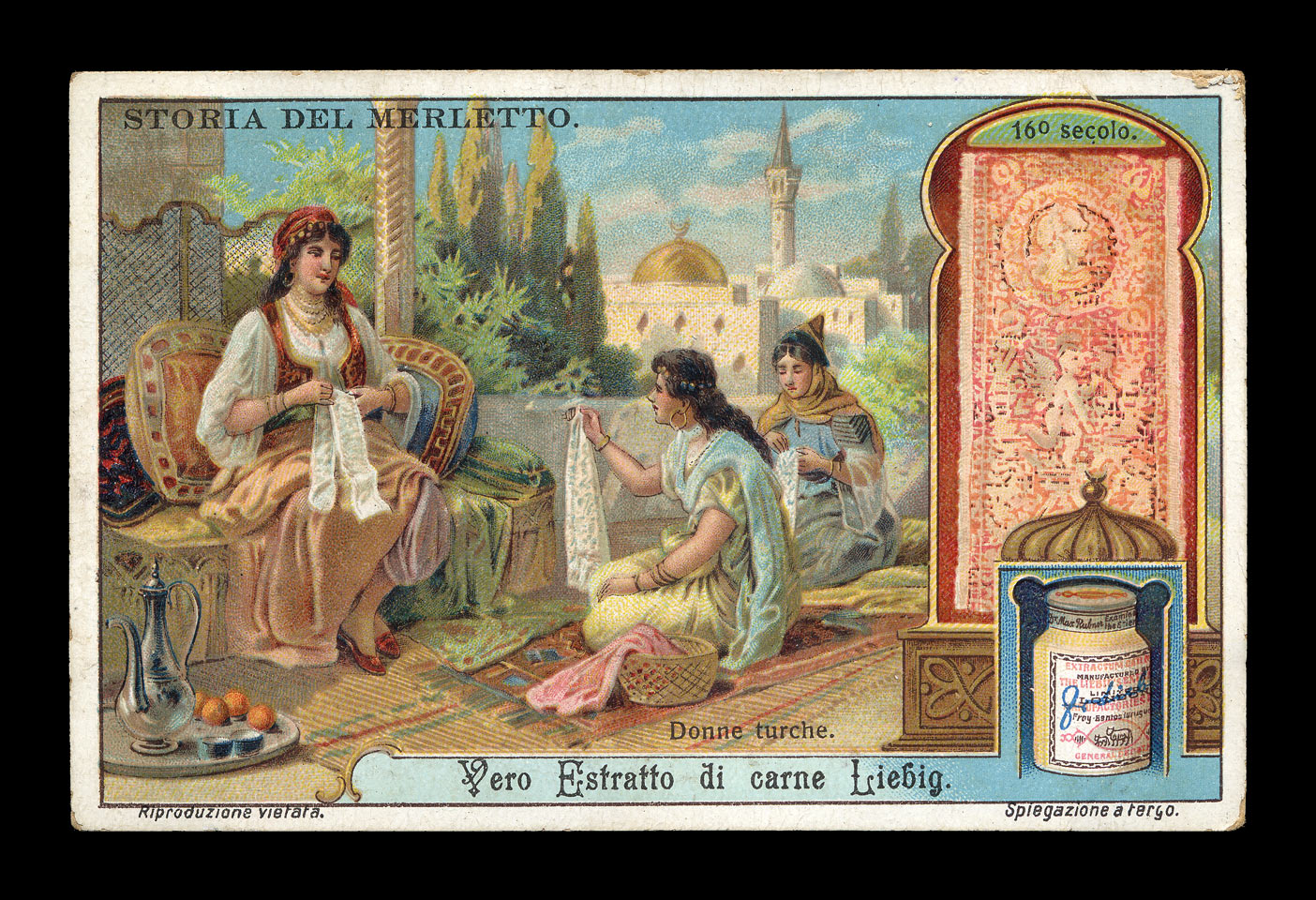 click here for reverse of Bruxelles click here for reverse of XVIe siècle |